O’Hare Can’t Afford a Summer of Chaos

Former U.S. Transportation Secretary Sounds Alarm on O’Hare
As a former U.S. Secretary of Transportation and a longtime Illinois congressman, I know firsthand how essential O’Hare is. It is one of the country’s most important transportation assets, a jobs engine, and a gateway for millions of travelers. But without action, this summer could push O’Hare to the breaking point.
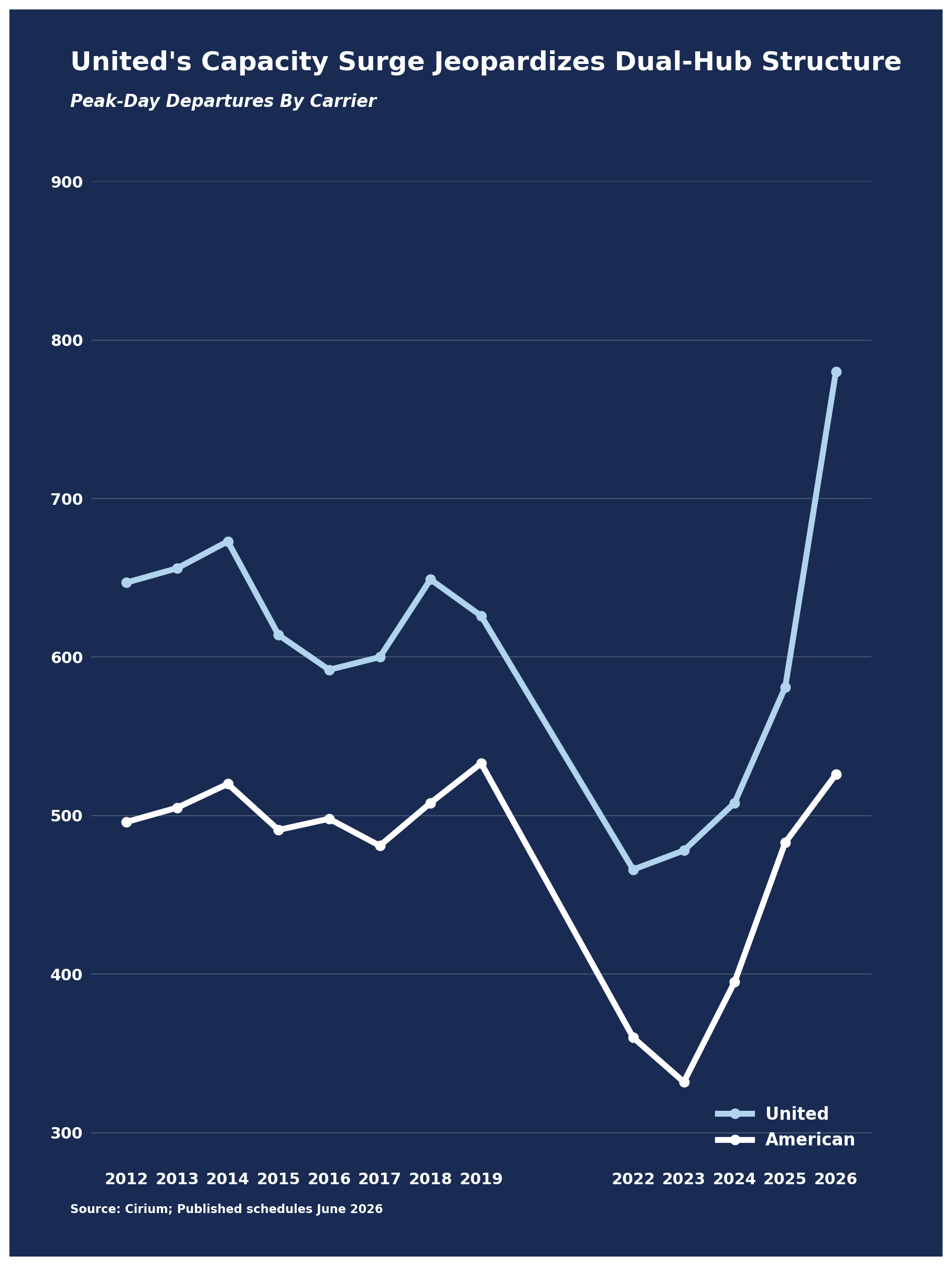
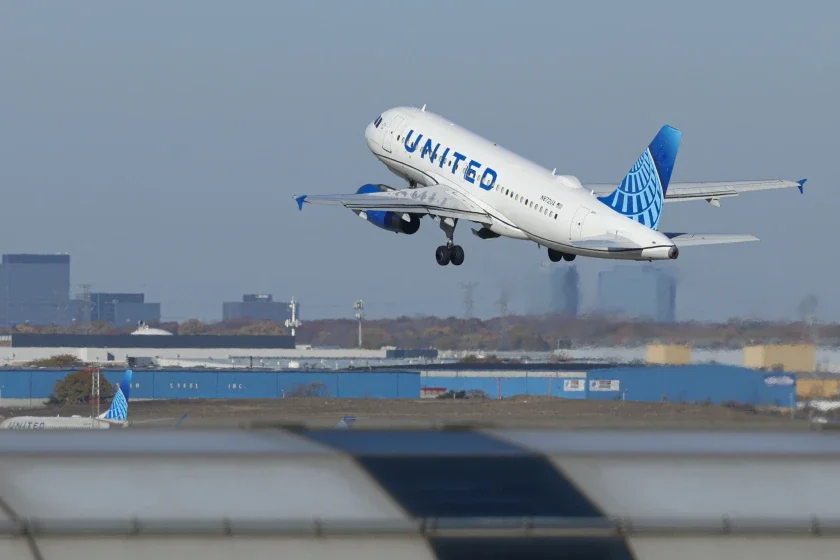
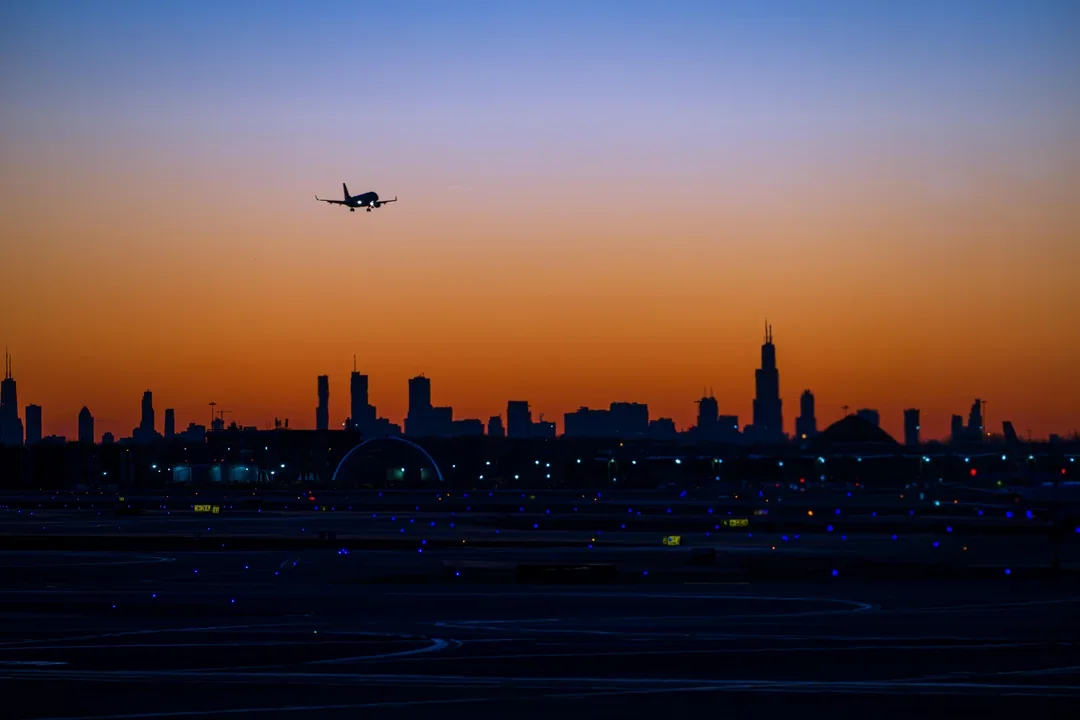
Last year, with more than 2,500 commercial, cargo, and private flights per day during peak season, O’Hare was already the most delayed airport in the United States. This summer, more than 3,000 flights are scheduled to take off and land every day.That surge, driven largely by United Airlines adding more than 130 daily departures in the last several weeks, will push O’Hare’s infrastructure and airspace to their limits before the busy season begins.
- Former U.S. Transportation Secretary Ray LaHood
OVER-SCHEDULING is crushing o’hare
The airport is already struggling. O’Hare was the most delayed airport in the United States in 2025, meaning additional congestion will compound an already fragile system.
More than 3,000 daily flights are scheduled this summer (roughly 400 more than last summer’s 2,500+ daily flights) despite the FAA concern that the airport cannot manage that level of operations, creating conditions for longer taxi times, cascading delays, and disruptions that will ripple across the entire national airspace.
United is dramatically overloading O’Hare. The airline plans a wildly disproportionate 780 peak-day departures in Summer 2026, a 34% increase from Summer 2025 that pushes the airport well beyond its complex operational capacity. United’s goal with this schedule is to push out competition. This threatens O’Hares’s dual hub which is bad for all passengers traveling through Chicago.
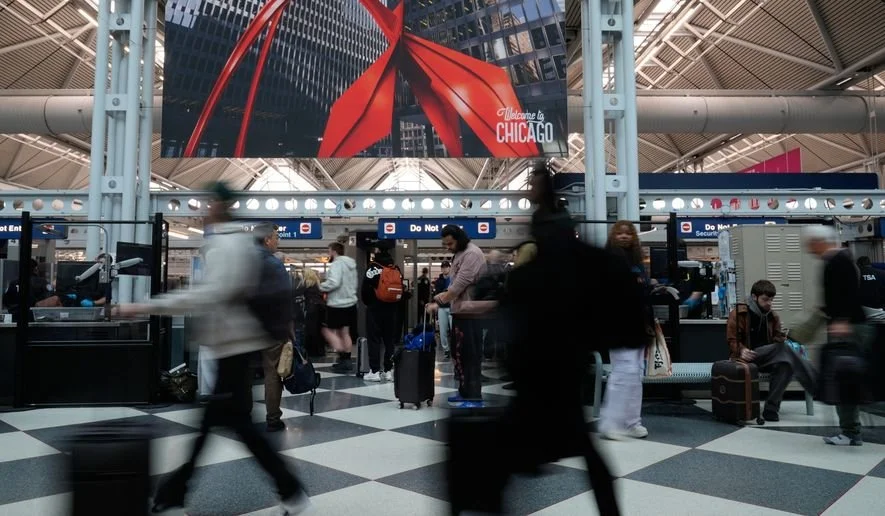
Conditions will worsen during major construction. Runway and roadway construction from May through October 2026 will further constrain airport capacity, increasing systemwide delays and disruptions.
Preserve the dual-hub
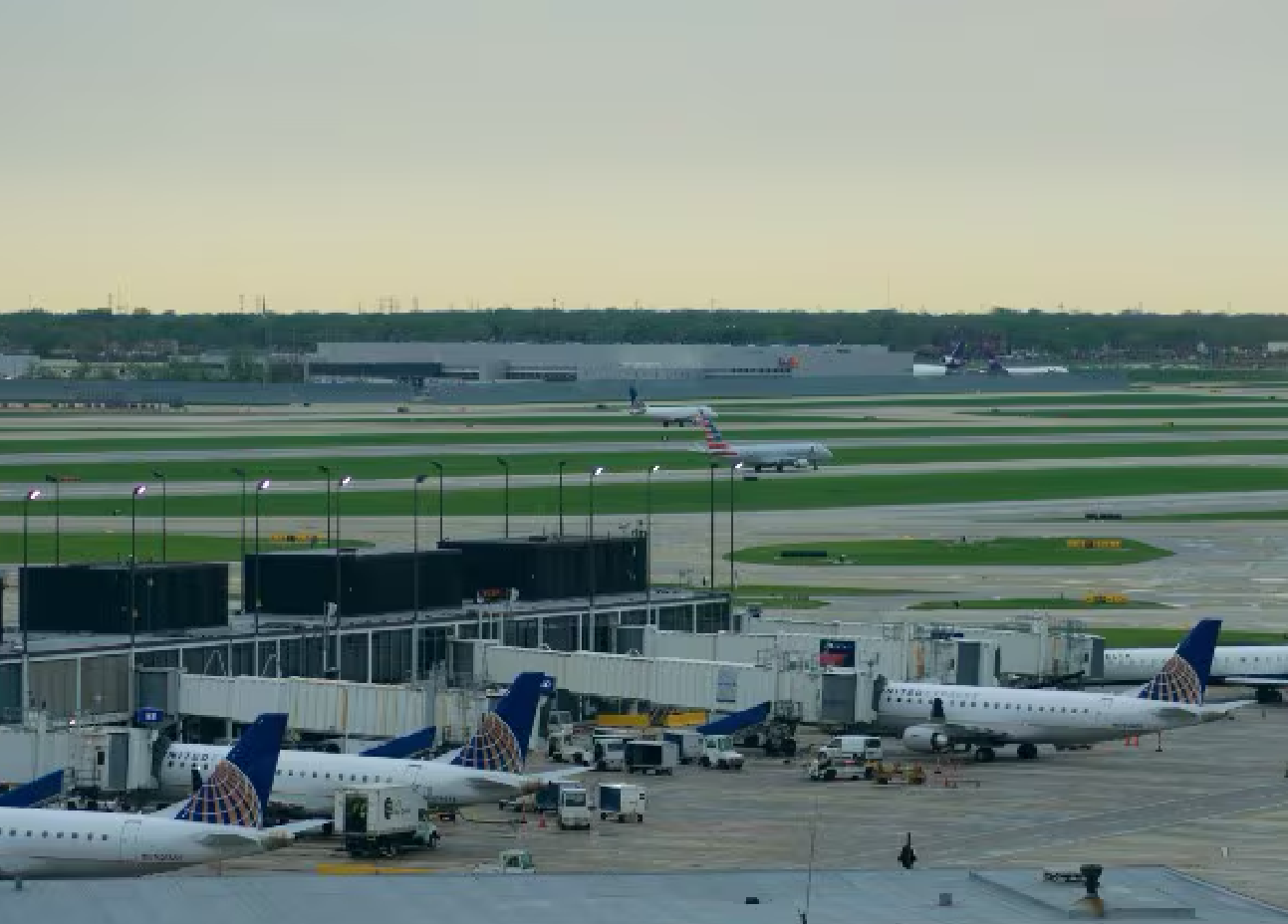
Chicago O’Hare’s dual-hub structure—anchored by both American Airlines and United—is one of the key reasons the airport remains one of the most important aviation gateways in the United States. With two global carriers operating major hubs at O’Hare, airlines compete to offer more destinations, better schedules, and lower fares—all of which greatly benefit passengers, while the scale of two hub operations supports thousands of jobs across airlines, airport operations, hospitality, cargo, and tourism.
Preserving a dual-hub is critical not only for Chicago’s economy and passengers, but for maintaining a resilient, competitive aviation network that helps attract businesses and jobs to the region.
Markets where two or more legacy carriers compete head-to-head see average fares 18–22% lower, according to DOT fare competition studies.
The airline industry directly employs an estimated 50,000+ workers at O'Hare across both carriers' combined hub operations. This workforce concentration would shrink significantly if either hub were downgraded or consolidated.